





Knowing when to prune a lemon tree avoids the most common mistake: cutting at the wrong time and going a year without lemons. A lemon tree does not need heavy pruning to crop, but a light prune at the end of winter keeps the canopy open, removes the shoots that steal the tree's strength and brings the lemons within easy reach.
Quick answer: prune a lemon tree at the end of winter, in February or March, before the main flowering and after the hard frosts. Cut out dead, diseased and crossing branches, any shoots growing below the graft and the vigorous shoots that grow straight up through the middle of the canopy. Make light cuts every year rather than a hard prune every now and then: over-pruning leaves the tree with lots of leaf and little fruit. In the first two to three years, it barely needs pruning at all.
In this article
1. When to prune a lemon tree
The best time is as winter ends, in February and March, before flowering, and March is the best month of all. These are the months for Portugal's Mediterranean climate and they shift with the region: on the Portuguese coast and in the Algarve you can start in February; inland, where frosts linger, wait until late February or March. Wherever you live, the rule is the same: prune once the hard frosts are over and before the main flowering.
There are two reasons not to prune in the depths of winter. The first is the cold: pruning pushes out new, tender shoots, which frost scorches (this is why hard pruning between November and January is best avoided). The second is plant health: in summer and autumn, new shoots are food for the citrus leafminer, a tiny caterpillar that tunnels through soft young leaves.
| Time of year | What to do |
|---|---|
| December and January | Do not prune. Only remove a branch broken by wind or frost, if needed. |
| February and March | Main prune: clean-up, opening the canopy and shaping. |
| April to June | Remove rootstock shoots and water shoots as soon as they appear, while still soft. |
| July to September | Clean-up cuts only. If the tree still has ripe lemons at the end of winter, you can put off the prune until late summer. |
| October and November | Avoid: shoots that grow now will not harden before the cold. |
If your lemon tree has been caught by frost: do not cut off the scorched branches straight away. Wait a few months, until the spring growth, to see how far the damage goes. That way you will not cut wood that is still alive.
2. Why prune (and why not to overdo it)
Citrus trees do not need pruning to fruit, but they respond well to it. Put simply, opening the centre of the tree to the light increases cropping. An open canopy dries faster after rain, suffers less disease and lets you spot pests in time.
Overdoing it is the more common problem. An over-pruned plant becomes very leafy and fruits poorly, so hard-prune no more than one branch a year. The reason lies in how the lemon flowers: the blossom forms at the tips of young side shoots. Cut them all off and you cut off that year's flowers.
The lemon has another peculiarity: many varieties flower more than once a year. The 'Verna' variety, for example, is repeat-flowering, with a main flowering in April and May and another in September. That is why there is hardly ever a time "without flowers" and why pruning should always be restrained.
3. What to cut and what to leave
- Shoots below the graft. These grow from the rootstock (the lower part, onto which the variety was grafted), grow fast and will not give you the lemons of your variety. Always remove them, flush with the trunk. Never let anything grow below the graft line.
- Water shoots. These are very vigorous shoots that grow straight up, mostly in the centre of the canopy, and lemon trees produce plenty of them. Remove those that sit too close to other branches or throw the tree off balance.
- Dead, broken or diseased branches. Cut back to healthy wood.
- Crossing or crowded branches in the centre. Choose the better one and remove the other, so light can get in.
- The "skirt" touching the ground. Lift the lowest branches a few centimetres: branches on the ground are a path for snails, ants and disease.
- Long, thin branches. Shorten them to just above an outward-facing bud, so they thicken and can carry the weight of the lemons.
What to leave: the young, well-lit side shoots, which are the ones that will flower, and a balanced canopy without large gaps.
African citrus psyllid in Portugal: in Portugal, the DGAV (the national plant health authority) has demarcated zones for Trioza erytreae, where branches and leaves from pruning must not leave the site.
4. How to prune a lemon tree, step by step
- Pick a dry day, with no frost forecast for the days that follow.
- Get your tools ready: sharp secateurs for thin branches and a pruning saw for thick ones. Disinfect the blades with alcohol before you start and when moving on to another tree. Wear gloves and long sleeves: many lemon trees have thorns.
- Start at the bottom: remove rootstock shoots and lift the skirt.
- Clean up: dead, broken, diseased and crossing branches.
- Open up the centre: remove one or two water shoots or branches that close the canopy. Step back from the tree now and then to see the whole shape.
- Shape: shorten branches that stray out of the canopy, always just above a bud or a side branch facing outwards.
- Stop in time. If you are unsure about a cut, leave it for another year.
Make clean, slightly sloping cuts, without leaving long stubs or tearing the bark. On thick branches, cut in three stages (one cut underneath, another on top a little further out, and the final cut next to the branch collar) so the weight does not strip the bark.
5. Young, mature and old lemon trees
Young lemon tree (the first 2 to 3 years)
Hardly any pruning. At this stage, remove only shoots below the graft and over-vigorous water shoots, and picking off any small fruits that form, so the tree puts its energy into growing. From early on you can choose three or four main branches spaced well around the trunk and gradually remove those that compete with them (this is common training practice, not a fixed rule).
Mature lemon tree
At around five years, the tree reaches fruiting age. From then on, the yearly prune is maintenance: removing dead wood, crossing branches and crowded branches in the centre, and keeping the tree at a height that is easy to pick from.
Old or neglected lemon tree
Bring it back gradually, over two or three years. At the end of each winter, remove one or two large, badly placed branches and the dead wood. Drastic pruning all at once fills the tree with water shoots and costs you the fruit.
6. Pruning a lemon tree in a pot
If winters where you live are too cold for a lemon tree to stay outdoors, this is the section that matters most. In a pot, pruning keeps the tree's size and shape in check. The rule is the same: a little, every year, in February or March, on a dry day with no frost forecast. At that time, thin out crowded branches and remove badly placed shoots; in summer, shorten any very vigorous new shoots that stick out of the canopy. Cut back by half any branches that become long and bare.
In a pot, watering and feeding count as much as the secateurs. A tree that goes thirsty or hungry will not flower, however well it is pruned. And do not let it carry too much: a plant about one metre tall should not carry more than twenty fruits at once.
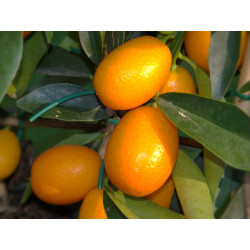
For pots and balconies, more compact varieties make life easier, such as the Meyer lemon, mandarins and kumquats. See our selection of fruit trees for pots.
7. After pruning: feeding, watering and pests
- Feeding: spring is when the tree needs the most nitrogen, from flowering until June. Split the fertiliser into three or more applications, starting in late February or March, and stopping in mid-August so as not to push out shoots that the cold will scorch. Use a complete fertiliser with magnesium and trace elements.
- Watering: water when the top 5 to 7 centimetres of soil are dry, slowly and without waterlogging.
- Leafminer: the larvae live only in new, glossy leaves. On mature trees the damage is mainly cosmetic, so treatment is not advised; pruning less often helps.
- Aphids and scale insects: ants protect them. A sticky band around the trunk cuts off their route.
8. Mistakes that leave a lemon tree without lemons
- Pruning hard all at once: the tree responds with leaves and water shoots, not flowers.
- Pruning with frost on the way: the new shoots get scorched.
- Cutting off every branch tip: that takes away the year's flowers.
- Letting the rootstock grow: in time it takes over the tree, and the lemons are no longer those of your variety.
- Blaming pruning for what is really watering or feeding: lack of light, lack of fertiliser, irregular watering and cold also stop flowering; and it is normal for the tree to drop many small fruits.
In summary
- Prune in February or March, before flowering and with no frost in sight.
- Always remove shoots below the graft and dead wood.
- Open up the centre, but a little at a time: flowers form at the tips of young shoots.
- Young trees need hardly any pruning; in a pot, make light cuts every year.
- After pruning, feed in spring and water regularly.
9. Frequently asked questions
Can I prune a lemon tree when it is in flower or carrying lemons?
You can make clean-up cuts, such as removing a dead branch or a rootstock shoot. Avoid hard pruning while the tree is laden: you lose the fruit on those branches. If the tree has ripe lemons at the end of winter, pick them first and prune afterwards.
How much can I cut off at once?
There is no official figure. Keep the pruning light, and hard-prune no more than one branch a year. In practice, if you have removed more than a small part of the foliage, you have cut too much for one year.
How long after pruning will it fruit again?
After a light prune, it carries on flowering the same year. A hard prune can delay cropping by a year or more, because the tree spends its energy rebuilding its foliage.
Why is my lemon tree not producing lemons?
The most common causes are age (a lemon tree reaches fruiting age at about five years), too much nitrogen, which gives lots of leaf and delays fruit, hard pruning, irregular watering and cold. On trees grown from seed, the first fruit can take many years.
Do I need to put wound sealant on the cuts?
On a small, clean cut, the tree closes the wound by itself. What helps most is cutting in the right place, next to the branch collar, with sharp, disinfected tools.
Are orange and mandarin trees pruned the same way?
Yes, the principles are the same for all citrus: a light prune at the end of winter, cleaning up and opening the canopy. The lemon is the one that produces the most water shoots and, because it flowers more often, the one that suffers most from hard pruning.
Lemon trees and the pruning manual in our shop



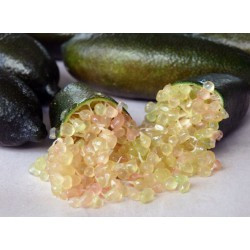
Want to know more? Read our guide to the finger lime, another citrus that does very well in a pot, and see our guide to the African citrus psyllid.
Sources
- University of California, UC Master Gardeners of Santa Clara County, "Citrus": ucanr.edu
- Spanish Ministry of Agriculture (MAPA), information leaflet on the 'Fino' lemon: mapa.gob.es
- Royal Horticultural Society, "Citrus: grow your own" and "Citrus problems": rhs.org.uk
- University of Arizona Extension, "Pruning citrus": extension.arizona.edu
- IVIA, fact sheet on the 'Verna' lemon: ivia.gva.es
- UC IPM, "Citrus leafminer": ipm.ucanr.edu
- DGAV, "Trioza erytreae" (demarcated zone and obligations): dgav.pt