
Choosing a citrus feed is simpler than it looks: what counts is using a complete fertiliser, with magnesium and trace elements, at the right time and at the right rate for the tree's age. In this guide we bring together the essentials for lemons, oranges, mandarins and other citrus, in the ground and in pots.
Quick answer: use a complete citrus fertiliser (NPK with magnesium and trace elements, such as the 6-6-6-2 or 8-3-9 formulas). Feed from late February or March until mid-August, splitting the amount into three or more applications; spring is when the need is greatest. A mature tree needs about 450 to 680 g of nitrogen a year; a young tree much less. In pots, use a slow-release fertiliser, or a liquid feed once or twice a month.
In this article
1. Which fertiliser to use
Citrus need nitrogen above all (the N in NPK), but not only that. Choose complete fertilisers with magnesium, such as the 6-6-6-2 (6% nitrogen, 6% phosphorus, 6% potassium and 2% magnesium), 8-3-9 or 4-2-12 formulas. Besides nitrogen, most orchards need zinc every year and that manganese deficiency is common.
In practice, choose a citrus or fruit tree fertiliser whose packaging shows:
- the three N-P-K numbers, with nitrogen equal to or higher than the others;
- magnesium (Mg);
- trace elements: iron, zinc and manganese.
Organic fertilisers work too, as long as you do the sums for the nitrogen they supply: they usually have lower percentages and release it more slowly.
2. When to feed
This is the calendar for citrus in climates with cool winters:
| Time of year | What to do |
|---|---|
| December and January | Do not feed: in cold soil, roots take up nitrogen poorly. |
| Late February or March | First application of the year. |
| April to June | The most important period: the greatest need for nitrogen runs from flowering until June. |
| July and early August | Last applications. |
| From mid-August | Stop: late feeding pushes out new shoots that the cold will scorch. |
These are the months for a cool-winter climate such as Portugal's, and they shift with your region. Split the year's amount into three or more applications. For young trees, make five or six applications from late February to August.
3. How much per tree
Rates are given in grams of actual nitrogen per tree per year, not grams of fertiliser:
| Age of tree | Actual nitrogen per year |
|---|---|
| Year 1 | 57 to 113 g |
| Year 2 | 113 to 227 g |
| Year 3 | 227 to 340 g |
| Year 4 onwards | 454 to 680 g |
Some put it lower, at up to 454 g of nitrogen a year for a mature tree. For a garden lemon tree, start at the lower figure and watch how the tree responds: leaf colour, new shoots and fruit.
4. How to work it out
Divide the grams of nitrogen by the fertiliser's nitrogen percentage (the first number in the NPK):
- Check the fertiliser's N. In a 9-3-3 fertiliser, there are 9 g of nitrogen in every 100 g of fertiliser.
- Work out the year's fertiliser. For 227 g of nitrogen (a tree in its 2nd or 3rd year): 227 ÷ 0.09 ≈ 2.5 kg of fertiliser a year.
- Split it. In five applications, that is about 500 g each time, from March to early August.
- Spread it evenly around the tree, over the root zone, away from the trunk, and water it in.
Always follow the packaging. The rates for each fertiliser, especially organic and slow-release ones, can differ. The sum above is there to check that you are in the right order of magnitude.
5. Iron, zinc, manganese and magnesium
- Iron: deficiency shows on new leaves, yellow with green veins, especially on chalky soils. It is corrected with iron chelates applied to the soil (Fe-EDDHA on chalky soil); applying it to the leaves is not effective.
- Zinc and manganese: yellowing between the veins on new leaves. Spray them on the new shoots.
- Magnesium: an upside-down V patch on mature leaves, near the fruit. It is corrected with magnesium sulphate (Epsom salts) or magnesium oxide.
To recognise each deficiency from the leaf, see our guide lemon tree yellow leaves: causes and what to do.
6. Citrus in pots
In a pot, frequent watering washes nutrients out, and the tree depends entirely on what you give it. Use a slow-release fertiliser mixed into the compost or a liquid feed once or twice a month, always complete, with trace elements.
For citrus grown in pots in the UK, a common recommendation is a high-nitrogen summer citrus feed from late March to October, and a more balanced winter feed from November to mid-March. Others prefer not to feed in winter, and outdoor trees should not be fed after mid-August. For a pot kept outdoors in Portugal, follow the calendar in section 2; for a pot that spends the winter under cover and keeps growing, a balanced winter feed is an option.
More care tips in our guide lemon tree in a pot: how to care for it.
7. Common mistakes
- Too much nitrogen: excess nitrogen reduces fruit size and quality and can delay ripening.
- Too little nitrogen: lack of nitrogen leads to poor flowering.
- Feeding in winter: in cold soil, little of it is used.
- Feeding late: after mid-August, new shoots are left exposed to the cold.
- Fertiliser piled against the trunk or spread on dry soil: always water it in.
In summary
- A complete citrus fertiliser, with magnesium and trace elements.
- From late February to mid-August, in three or more applications.
- Mature tree: about 450 to 680 g of actual nitrogen a year; young tree, much less.
- The sum: grams of nitrogen ÷ the fertiliser's N percentage.
- Iron to the soil as a chelate; magnesium as magnesium sulphate.
8. Frequently asked questions
What is the best citrus feed?
A complete fertiliser, with as much or more nitrogen than the other nutrients, plus magnesium and trace elements. The formulas 6-6-6-2, 8-3-9 and 4-2-12 are examples. Timing and rate matter more than the brand.
When should I feed a lemon tree?
From late February or March until mid-August, splitting the amount. Spring is the most important time.
Can I use a feed for flowering plants?
You can, if it is complete and has enough nitrogen and trace elements. Specialist citrus feeds already have the right balance and the magnesium.
Do citrus in pots need more feeding?
More often and in smaller amounts: a liquid feed once or twice a month, or a slow-release fertiliser, because watering washes nutrients out of the pot.
Can I use the same fertiliser for orange, mandarin and lemon trees?
Yes. The recommendations are for citrus in general; what changes is the rate, according to the size and age of the tree.
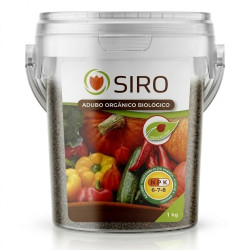
Fertilisers for your citrus



Sources
- UC Cooperative Extension Placer and Nevada Counties, fertilising citrus: fruitsandnuts.ucdavis.edu
- UC Master Gardeners of Santa Clara County, "Citrus": ucanr.edu
- University of Florida IFAS, "Lemon growing in the Florida home landscape" (HS402): ask.ifas.ufl.edu
- University of Florida IFAS, "Meyer lemon": gardeningsolutions.ifas.ufl.edu
- University of Florida IFAS, magnesium deficiency (HS141): ask.ifas.ufl.edu
- Royal Horticultural Society, "Citrus: grow your own": rhs.org.uk