- New
- Out of stock
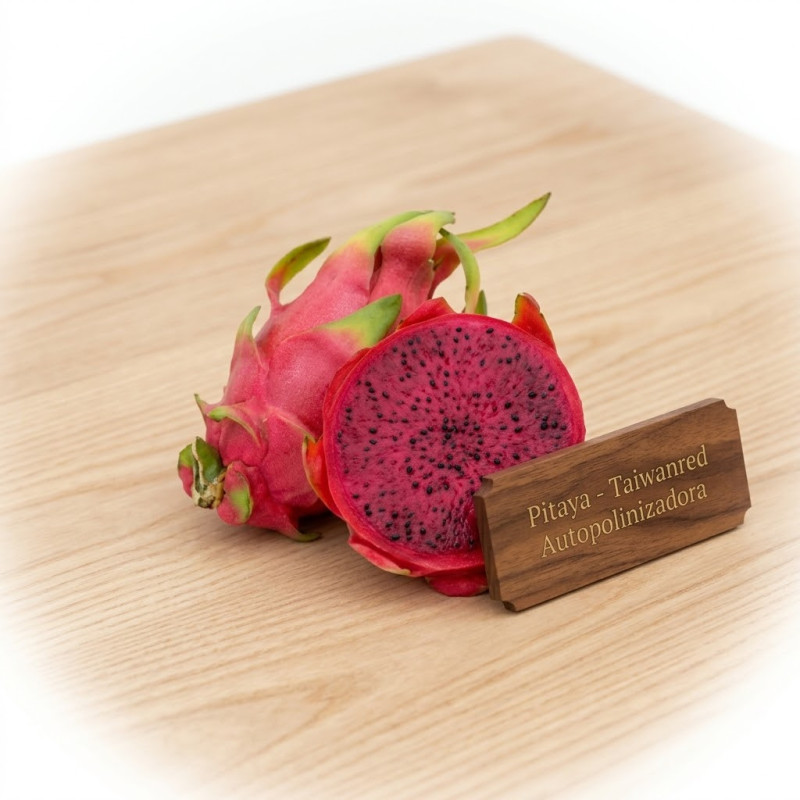

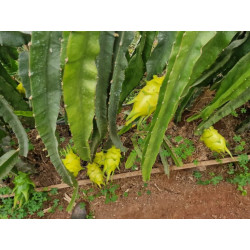
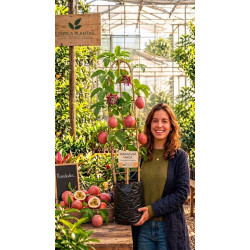
Dragon fruit TaiwanRed, a self-pollinating variety with deep red, sweet and aromatic flesh. Vigorous, flowers often and adapts to different climates.
Dragon fruit TaiwanRed (self-fertile) is a dragon fruit plant (Selenicereus spp. (Hylocereus)), one of the dragon fruit plant varieties that Dorca Plantas ships from Mação, Portugal, across Europe. On the Dragon fruit plants page you will find the other varieties and a growing guide.
Plant in spring or early summer, from April to July, when the nights are already warm. The pitaya needs a post or wall to climb, sun (with some shade in the hottest hours in hot inland areas) and very light, free-draining soil: standing water rots the base. Water moderately in summer and hardly at all in winter. It dislikes cold: frost scorches the stems, so in colder areas keep it in a pot and bring it under cover in winter. The flowers open on summer nights and the fruit ripens about six weeks later.
Pollination matters most. Many pitayas, especially red-fleshed ones, need pollen from another variety to fruit. If you only have room for one plant, choose a self-pollinating one: Royalred, TaiwanRed, Jindu1, White Vietnam or Giant Vietnam. Choose by colour too: the reds have a stronger flavour, the whites a milder one, and the yellow is usually the sweetest.
Does a pitaya need another plant to fruit?
It depends on the variety. Self-pollinating ones fruit on their own; the others need another variety nearby or hand pollination at night with a brush.
How long does a pitaya take to fruit?
A plant grown from a cutting usually gives its first fruit one to three years after planting, when the stems reach the top of the post and start to hang down.
Can a pitaya be grown in a pot?
Yes. Use a pot of at least 40 litres, light compost and a sturdy support. In a pot it is easier to protect from the cold in winter.
Dragon fruit TaiwanRed, a self-pollinating variety with deep red, sweet and aromatic flesh. Vigorous, flowers often and adapts to different climates.